
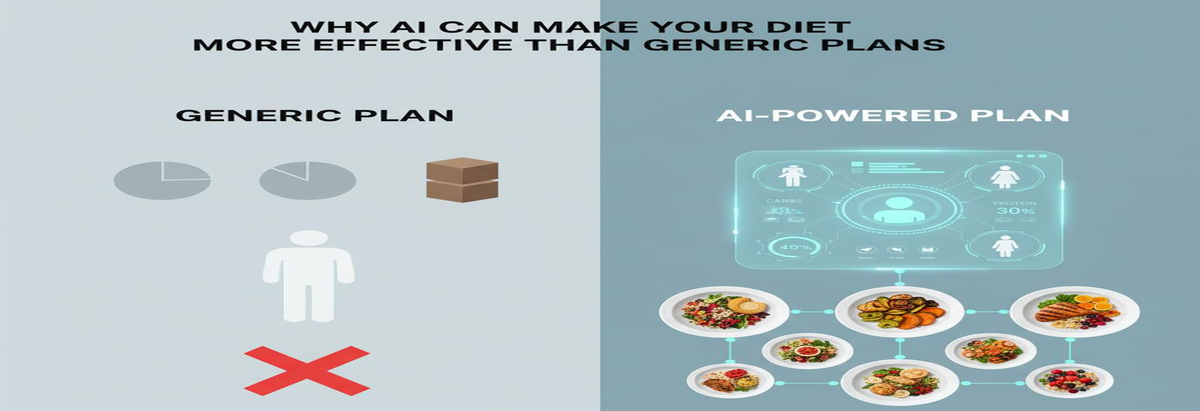
Why AI Can Make Your Diet More Effective Than Generic Plans
Why AI Can Make Your Diet More Effective Than Generic Plans
> Artificial intelligence (AI) is reshaping the way we think > about food and health. While traditional diet plans often rely on > one-size-fits-all guidelines, AI introduces a more individualized, > data-driven approach. By integrating personal health data, lifestyle > patterns, and evidence from clinical nutrition, AI makes diets > not only more effective but also sustainable in the long term.
The Problem with Generic Diet Plans
> Most diet programs are designed for the "average" person. While they > offer a broad framework, they rarely account for personal differences > that affect diet outcomes. Common limitations include:
- Ignoring genetic and metabolic variability
- Overlooking food intolerances and allergies
- Failing to consider cultural or religious dietary practices
- Providing limited flexibility for lifestyle changes
- Offering generic calorie counts without context
> As a result, many people find it difficult to stick with these diets, > or they don’t see meaningful results.
How AI Personalizes Your Diet
> AI-powered nutrition systems overcome these shortcomings by tailoring > dietary recommendations to the individual. The process typically > involves:
- Data Collection: AI gathers information from health records, wearable devices, lab tests, and self-reported lifestyle data.
- Machine Learning Analysis: Algorithms process this data to identify dietary needs, patterns, and health risks.
- Personalized Recommendations: The system generates tailored meal plans, portion sizes, and nutrient timing strategies based on your unique profile.
- Real-Time Adjustments: AI continuously adapts recommendations as new data is added, making plans dynamic rather than static.
Benefits of AI Over Generic Plans
1. Improved Precision AI accounts for genetic, metabolic, and lifestyle differences, delivering diet plans that align with individual needs.
2. Sustainable Adherence Personalized recommendations fit seamlessly into a person’s daily routine, making them easier to follow over time.
3. Health-Driven Outcomes AI diets are not just about weight loss. They address specific health goals such as blood sugar management, cholesterol reduction, or muscle gain.
4. Adaptive Guidance Unlike static plans, AI continuously refines recommendations based on feedback and new health metrics.
5. Integration with Clinical Protocols AI aligns with established nutrition and medical guidelines, ensuring safety and evidence-based practice.
Real-World Applications of AI Dieting
> AI-powered nutrition is already being applied in areas such as:
- Diabetes Care: Predicting blood sugar responses to meals and optimizing carbohydrate intake.
- Sports Performance: Personalizing protein and calorie intake for training and recovery.
- Chronic Disease Management: Adjusting fat, sodium, and cholesterol levels for cardiovascular health.
- Weight Control: Developing individualized calorie deficits that are both effective and sustainable.
> These examples show that AI-driven diets go beyond surface-level > guidance, addressing the deeper biological and lifestyle factors that > determine health outcomes.
Challenges and Considerations
> While AI-based diets offer many advantages, challenges remain:
- Data Security: Protecting sensitive health and lifestyle information is critical.
- Algorithm Transparency: Users and clinicians need to understand how AI makes recommendations.
- Accessibility: Advanced platforms may be costly, limiting access for certain populations.
- Human Oversight: AI should complement professional medical advice, not replace it.
The Future of AI Dieting
> As technology advances, AI will integrate more sophisticated data such > as genomics, gut microbiome analysis, and real-time biomarker > tracking. This evolution will make diets even more personalized and > effective. AI will not only tell you what to eat but also predict how > your body will respond, making nutrition truly preventive and > proactive. > > By moving beyond generic plans, AI is setting the stage for a future > where dietary advice is smarter, safer, and far more impactful.
1: How does an AI Personalized Nutrition plan work, and why is it more effective than a generic diet?
Answer: AI-driven plans surpass generic diets because they move from a "one-size-fits-all" approach to a dynamic, individualized strategy. AI systems utilize Machine Learning algorithms to process vast and complex personal data—including genetic, metabolic, and behavioral information—to generate hyper-personalized nutrition insights.
This personalization leads to better results because:
- It Accounts for Variability: AI adjusts recommendations based on your unique metabolic rate and specific health conditions (like diabetes or obesity), a capability generic plans cannot match.
- Clinical Efficacy: Clinical trials have demonstrated that AI-generated interventions lead to significantly improved clinical outcomes, including better glycemic control and overall metabolic health.
- Adaptive Guidance: Unlike static plans, the AI continuously refines your dietary advice based on real-time feedback (see FAQ 2), which is proven to increase long-term user adherence and sustained behavioral changes.
FAQ 2: What kind of personal data does the AI use, and how does it adjust the meal plan in real time?
Answer: AI Personalized Nutrition (PN) relies on rich, individual-level data inputs to achieve real-time personalization.
- Data Sources: Advanced systems integrate data from wearable
sensors such as Continuous Glucose Monitors (CGMs), detailed food
logging apps, self-reported lifestyle metrics, and, in advanced
research settings, multi-omics
(
- The Adjustment Mechanism: Machine Learning algorithms process this streaming data dynamically. For example, if your CGM data shows a high blood sugar spike after a specific lunch, the AI can instantly adjust the recommendations for your next meal or future meal plans to minimize that adverse response. This creates an adaptive feedback loop that optimizes the plan moment-to-moment.
FAQ 3: Are AI-generated diet plans safe, and can they replace my Registered Dietitian?
Answer: AI tools, while highly effective, are intended to enhance, rather than replace, the expertise of clinical nutrition professionals.
- Accuracy and Limitations: AI chatbots show high overall diet quality (high DQI-I scores), but studies consistently highlight limitations in achieving optimal macronutrient distributions (e.g., precise fat and protein ratios) and consistent caloric accuracy. Human oversight is crucial to correct these deficiencies and ensure safety.
- The Indispensable Human Element: A Registered Dietitian Nutritionist (RDN) provides the crucial human touch by interpreting AI data within the context of your real-world life—addressing food allergies, budget constraints, cultural preferences, and psychological factors related to eating and stress management.
- Safety and Ethics: The development and use of all medical AI must adhere to strict ethical guidelines, including compliance with data protection laws like HIPAA to safeguard your sensitive health information.
FAQ 4: How much do advanced Personalized Nutrition Apps cost, and are they accessible to everyone?
Answer: The cost of access to advanced, data-driven nutrition platforms is a growing concern regarding equity in healthcare.
- Development Costs: The investment required to develop a professional, feature-rich Personalized Nutrition App that includes sophisticated AI models, real-time tracking, and regulatory compliance is substantial. Development costs typically range from approximately \$19,500 for basic features to over \$325,000 for platforms integrating advanced personalized AI and multi-omics data.
- Accessibility Challenges: Because of these high development and operational costs, advanced AI in healthcare may not be affordable or easily accessible to all populations. This risk of creating a digital health disparity is an active ethical challenge the industry is working to address, focusing on strategies to ensure that the benefits of precision nutrition are available inclusively.